


✍️ Introduction
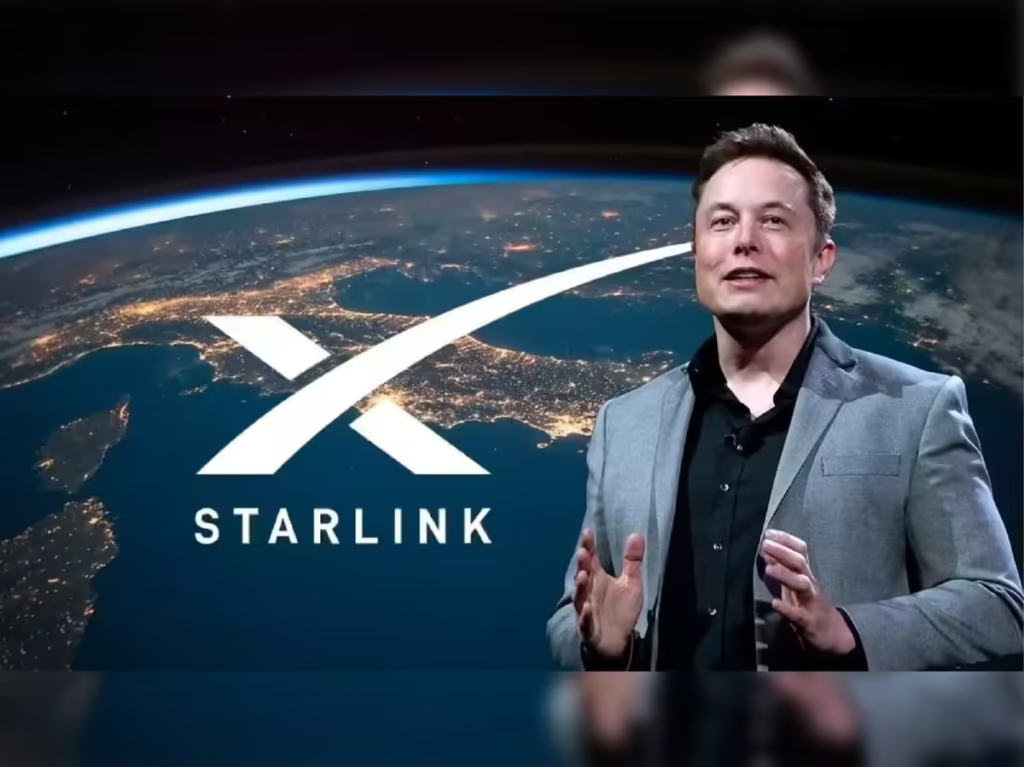
Elon Musk’s Starlink, a satellite-based internet service by SpaceX, is preparing to enter the Indian market. With promises of high-speed internet even in the most remote corners of the country, many are calling it a digital revolution. But is Starlink really the game-changer India needs for rural connectivity?
🧠 Context
India has over 70 crore internet users, yet rural internet access remains poor. Starlink, already serving 2M+ users worldwide, received a satellite telecom license in India and is awaiting final regulatory nod. It aims to deliver 50–250 Mbps speeds even in remote areas using low-earth orbit (LEO) satellites. With a ₹33,000 device kit and ₹3,000–4,200 monthly plan, it promises freedom from wires — but raises new questions too.
✅ Arguments in Favour (YES – Starlink is a breakthrough)
-
✅ High-speed internet in remote areas
Starlink can bring reliable internet to hilly regions, tribal zones, and border areas. -
✅ No need for physical cable infrastructure
It skips the need for fiber optic cables, making it ideal for remote terrain. -
✅ Quick deployment in disaster-hit areas
Can restore connectivity during floods, earthquakes, or border conflicts. -
✅ Boosts rural education
Students in villages can attend online classes and access digital learning content easily. -
✅ Promotes telemedicine
Remote health centers can consult specialists through high-speed video calls. -
✅ Empowers agri-tech and local startups
Farmers can access weather, mandi rates, training videos, and e-commerce platforms. -
✅ Supports Digital India vision
Helps bridge the digital divide between Bharat and India. -
✅ Encourages decentralization of opportunities
People can work remotely from small towns instead of migrating to metros. -
✅ Backed by advanced LEO technology
Low-Earth Orbit (LEO) satellites ensure lower latency than traditional satellites. -
✅ Global experience and proven success
Starlink has already succeeded in rural US, Canada, Africa — India is next.
Also Read: Is India Ready for Electric Vehicles?
❌ Arguments Against (NO – Starlink has challenges)
-
❌ Too expensive for rural users
₹33,000 setup + ₹3–4K/month is unaffordable for poor households. -
❌ Electricity and maintenance issues
Dish and router need consistent power, which many rural areas lack. -
❌ Weather-dependent performance
Heavy rain, snow, or clouds can disrupt satellite signals. -
❌ Foreign ownership and data risk
Data privacy and national security concerns with a US-based company. -
❌ No service centers or local support
In case of tech failure, help may not be easily available in villages. -
❌ Environmental risks in space
Thousands of satellites increase space junk and may affect astronomy. -
❌ Not ideal for shared public networks
High user density in Indian villages may choke bandwidth or speed. -
❌ Lagging regulatory framework
India lacks clear long-term satellite internet policies or control mechanisms. -
❌ Local competitors may suffer
Jio Satellite, OneWeb (Bharti) could be outcompeted by foreign giants. -
❌ Focus may shift from real broadband reform
Government might delay fiber rollout in favor of glamorous private alternatives.
🔚 Balanced Conclusion
Starlink has the potential to revolutionize rural internet access in India — especially in geographically challenging areas. However, high cost, infrastructure gaps, and data sovereignty issues must be addressed. The future lies in a hybrid model that blends satellite tech like Starlink with public-private terrestrial networks.
📌 Quick Summary
-
YES: Starlink enables fast, wireless internet in remote areas and supports rural education, health, and jobs.
-
NO: It’s expensive, foreign-owned, and limited by infrastructure, weather, and space risks.
-
Verdict: A powerful tool — but must be integrated carefully with national digital goals.
❓ FAQs
Q1. What is the cost of Starlink in India?
₹33,000 for the dish + ₹3,000 to ₹4,200 monthly plan.
Q2. When will Starlink launch in India?
Regulatory clearance is expected in mid-2025. Pilot services may begin by late 2025.
Q3. Are there Indian alternatives to Starlink?
Yes — Jio Satellite (Reliance), OneWeb (Bharti Global), and HughesNet India are also working on similar services.